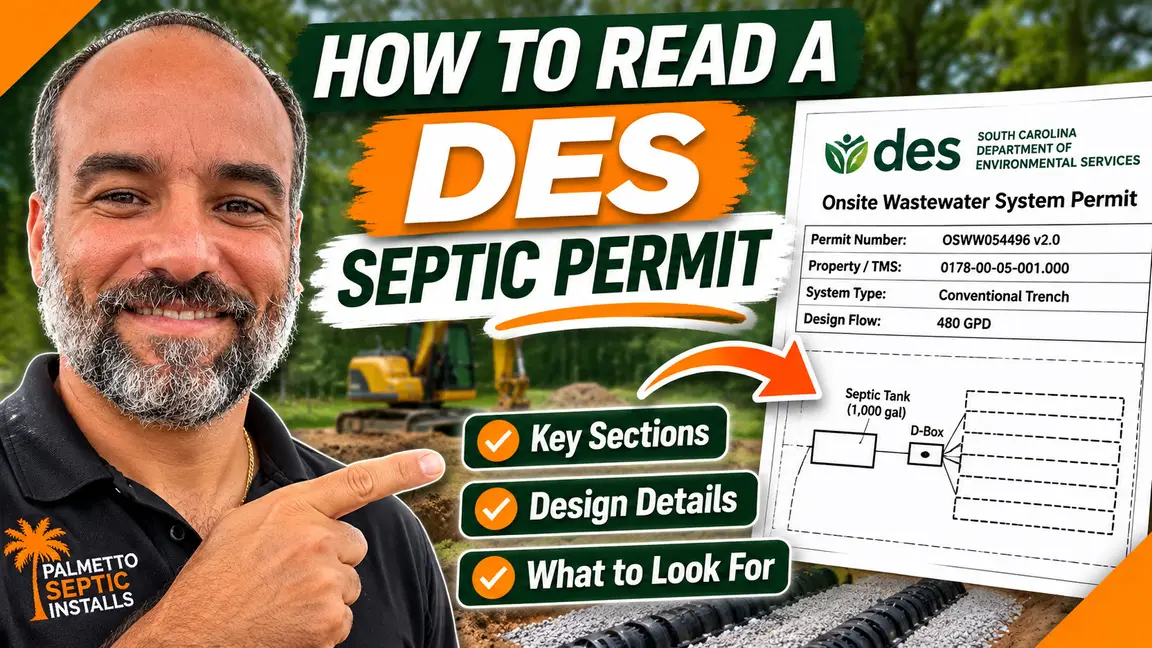

If you’re planning to install a septic system in South Carolina, one of the most important documents you’ll receive is your septic Permit to Construct from the South Carolina Department of Environmental Services (SCDES).
Whether you’re a homeowner, real estate investor, builder, or septic contractor, understanding how to read this permit can help you avoid expensive mistakes, installation delays, and failed inspections.
At Palmetto Septic Installs, we work with South Carolina septic permits regularly. In this guide, we’ll explain what to look for and how to understand the information provided by DES.
What Is a DES Septic Permit?
The South Carolina Department of Environmental Services (SCDES) is responsible for regulating onsite wastewater systems throughout the state.
Before a new septic system can be installed, DES evaluates the property to determine whether its soil and site conditions can support wastewater treatment and disposal.
If the property meets the applicable requirements, DES issues a Permit to Construct.
This permit establishes the approved system requirements and conditions under which the septic installation must take place.
You can learn more about the process on the official South Carolina DES septic systems website.
1. Verify the Property and Permit Information
Start by reviewing the identifying information on the permit.
Look for:
- Permit number and any revision number
- Property address and county
- Tax map number or property identification
- Permit issuance and expiration dates
- Type of proposed development or dwelling
Confirm that the permit matches the property where the septic system will be installed.
This is especially important for real estate investors working with subdivided properties, manufactured homes, and vacant land.
DES generally issues a Permit to Construct valid for five years, but always verify the applicable expiration date and any special conditions.
2. Identify the Approved Septic System Type
Not every property qualifies for a conventional gravity-fed septic system.
Depending on soil conditions, topography, and other site characteristics, the approved design may require a different type of installation.
Common configurations include:
- Conventional gravity-fed septic systems
- Aggregate trench systems
- Chamber systems
- Pump-assisted systems
- Systems requiring curtain drains
- Specialized or engineered septic systems
Understanding the approved system type is essential when estimating installation costs and ordering materials.
A pump-assisted system, for example, may require an additional tank, electrical components, controls, and pressurized piping.
3. Review the Required Drainfield Dimensions
One of the most important parts of a septic permit is the drainfield design.
Depending on the approved system, the permit and accompanying documents may specify:
Total drainfield length: The amount of absorption trench required, commonly measured in linear feet.
Trench width: The approved width of the absorption trenches.
Maximum trench depth: How deep the trenches are permitted to be excavated.
Aggregate depth: The required amount of approved stone or aggregate, when applicable.
Trench spacing: The separation required between individual absorption trenches.
For example, a permit might authorize a specific total length of trenches with designated widths, depths, and aggregate requirements.
These specifications are not interchangeable. Changing trench dimensions or substituting materials without appropriate authorization can cause an installation to fall outside the approved permit.
4. Understand the Soil and Site Conditions
Soil conditions are among the most important factors affecting septic system design.
During the site evaluation, DES examines characteristics that influence how wastewater can be treated and absorbed.
Two important terms you may encounter are:
Zone of Saturation (ZOS): The level at which soil becomes saturated with water under relevant seasonal conditions. Septic systems must maintain the required vertical separation from this zone.
Restrictive Horizon: A soil layer or other subsurface feature that restricts wastewater movement or affects the suitability of a drainfield.
These conditions can influence the allowable trench depth, the type of system approved, and whether additional site preparation is necessary.
South Carolina’s onsite wastewater requirements are established in Regulation 61-56.
5. Understand the Septic System Layout
Many DES permits include a drawing or site layout showing where the approved septic system is intended to be installed.
The layout may identify:
- The proposed house or manufactured home
- Septic tank location
- Drainfield location and configuration
- Property boundaries
- Wells, easements, and other site features
- Required setbacks or reserved repair areas
Before installation begins, the contractor should compare this information with actual field conditions.
A septic system must meet the approved design and applicable setback requirements. Existing utilities, drainage features, or unexpected site conditions may require further coordination with DES.
6. Review Special Installation Conditions
Pay particular attention to notes, restrictions, and special instructions associated with the permit.
These may address:
- Maximum excavation depths
- Required aggregate or chamber specifications
- Curtain drain requirements
- Pump system specifications
- Fill or grading requirements
- Additional engineering documentation
- Special inspection conditions
These instructions can significantly affect the scope and cost of an installation.
Never assume two septic permits have identical requirements just because the properties are similar.
7. Understand the Final Inspection Process
Receiving a Permit to Construct is not the same as receiving authorization to operate a completed septic system.
After installation, DES must verify that the system complies with the approved requirements.
The installer must arrange the required final inspection before covering the system. Eligible licensed installers may perform an authorized self-inspection under DES procedures when the required conditions are met.
Once the completed installation is accepted, an Approval to Operate can be issued.
DES provides additional information through its Final Inspection Request page.
How to Apply for a Septic Permit in South Carolina
Property owners and authorized applicants can submit an onsite wastewater system application through the DES ePermitting system.
The general process involves submitting the application, completing the required site evaluation, receiving the approved Permit to Construct, installing the system, and obtaining final approval.
To begin, visit the SCDES ePermitting website.
You can also review the DES septic permitting instructions and training resources.
Watch Our Video: How to Read a DES Septic Permit
We’ve created a video walking through how to read and understand a South Carolina DES septic permit.
In the video, we explain the important sections, how to interpret installation requirements, and what property owners and septic contractors should look for before starting a job.
Understanding your permit before construction begins can save time, money, and unnecessary complications.
Need a Septic System Installed in South Carolina?
At Palmetto Septic Installs, we provide professional septic system installations throughout South Carolina.
We work with homeowners, builders, real estate investors, and property developers who need dependable septic installation services.
Already have a DES permit? Contact us to discuss your project and receive an installation quote.
Palmetto Septic Installs
Phone: 803-560-9907
Contact us today to discuss your septic installation project.
Disclaimer: This article is intended for educational purposes. Always follow your actual DES permit, approved plans, and applicable South Carolina regulations. Contact SCDES for clarification when permit requirements are unclear.